


Ecommerce SEO services that build authority, expand relevant reach and drive revenue.
People searching for the products you sell are already telling you exactly what they are looking for. Ecommerce SEO services position your products and categories across those searches, building relevant organic exposure where purchase intent already sits. An ecommerce SEO consultant aligns your site architecture, product and category optimization, technical SEO, and keyword strategy around that demand. The result is qualified traffic with a reason to buy, and an organic channel built to drive revenue with extremely low CPA over time.
Your Growth Starts Here
Remove the guesswork, leverage actionable data – then monetize it
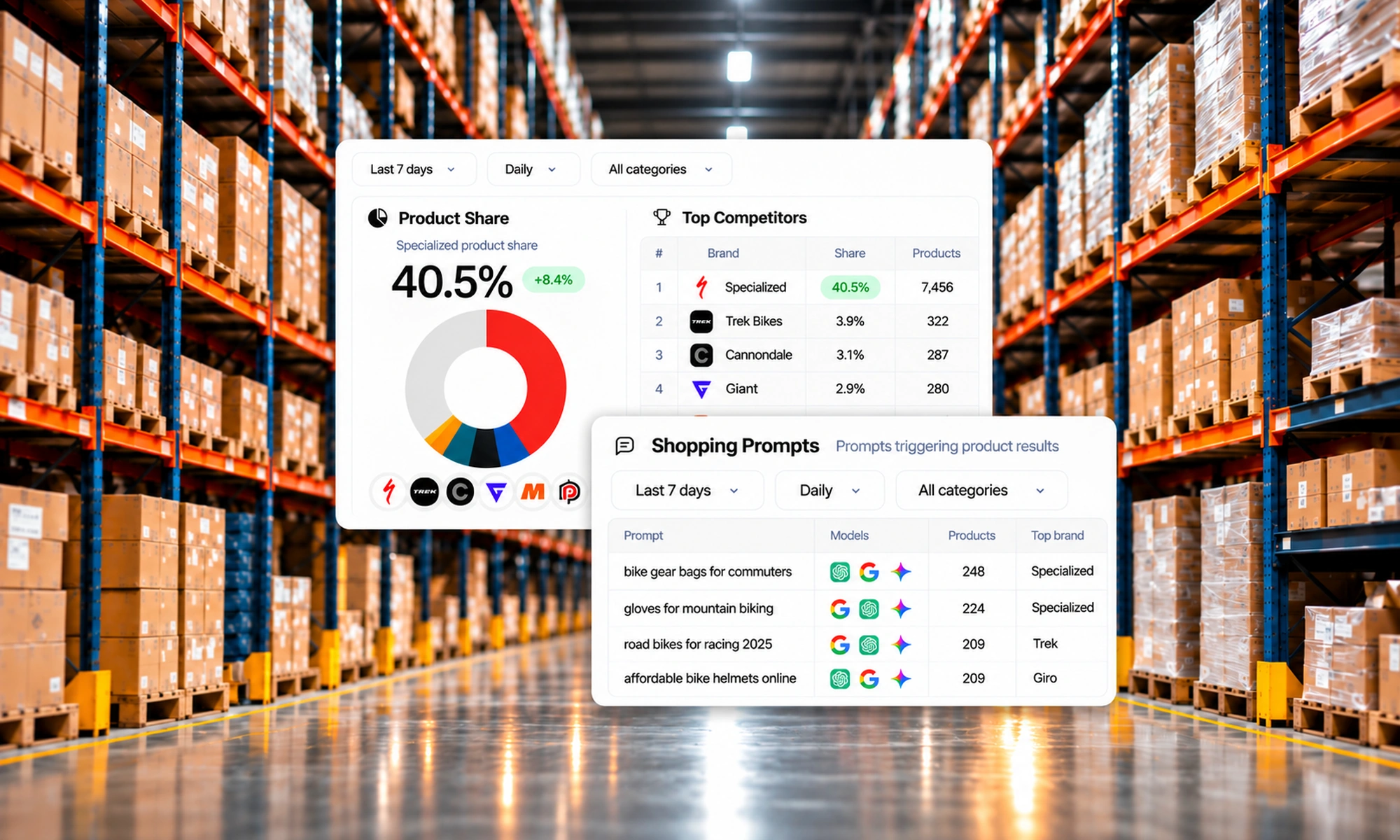
TL;DR: The Quick Summary
How ecommerce SEO services create growth
What makes ecommerce SEO work
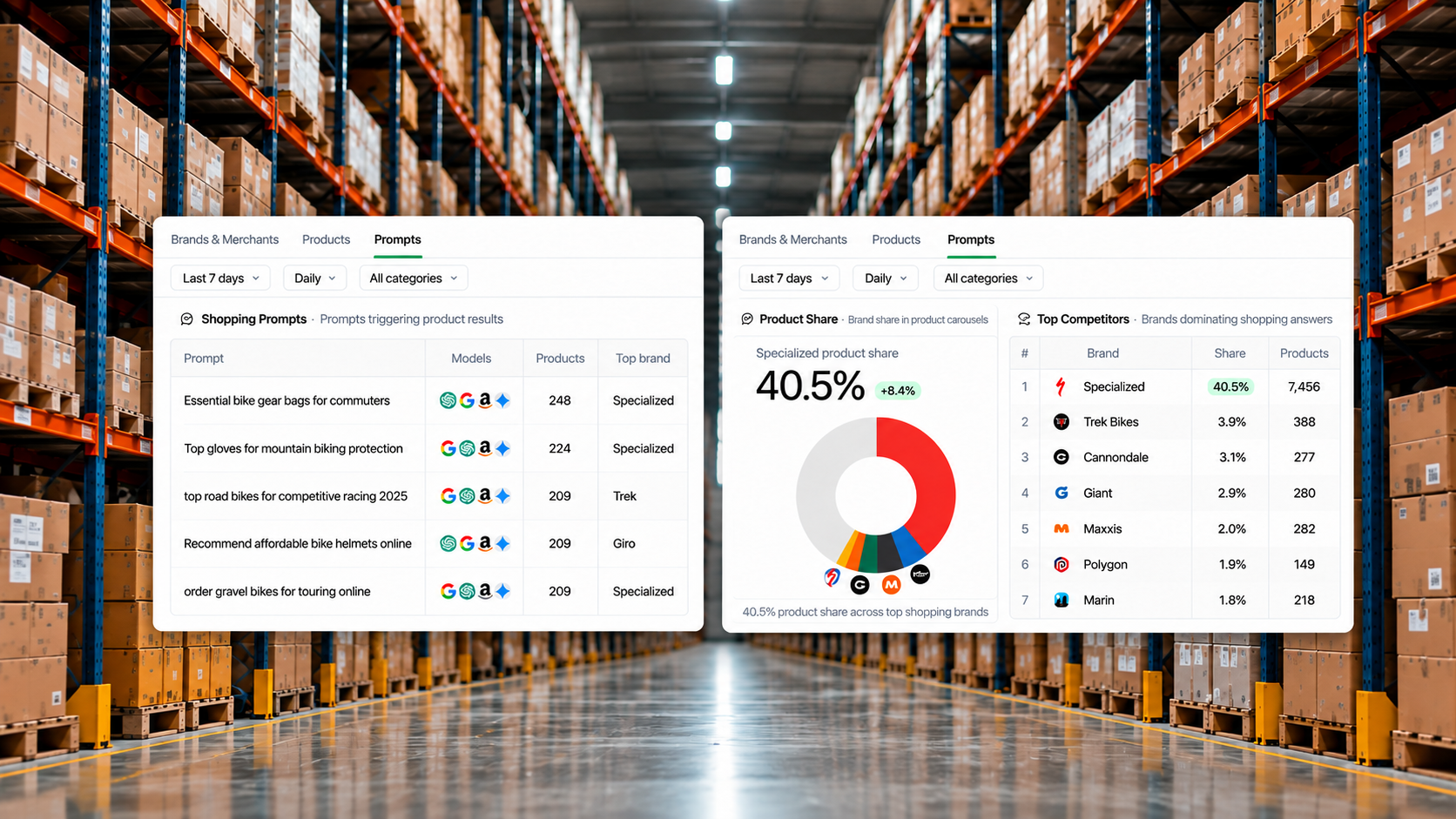
TL;DR: The Quick Summary
How ecommerce SEO services create growth
What makes ecommerce SEO work
The importance of ecommerce SEO
Your buyer wants your product. But can they find it?
Your ecommerce business is like New York City: it doesn’t sleep. Which means you get to make money while you catch the zzz’s. The question is, are you positioned to capture that demand, or are your competitors taking the market share? Every product and category search represents buyer intent. Effective ecommerce SEO services put your business in position to win those searches.
Ecommerce SEO delivers one of the lowest costs per acquisition across digital marketing. Organic visibility compounds without paying for every click, building digital real estate that drives revenue and belongs to your business. Paid media rents exposure. Ecommerce SEO builds and owns it.
Pro Tip: Pair it with UX & CRO efforts
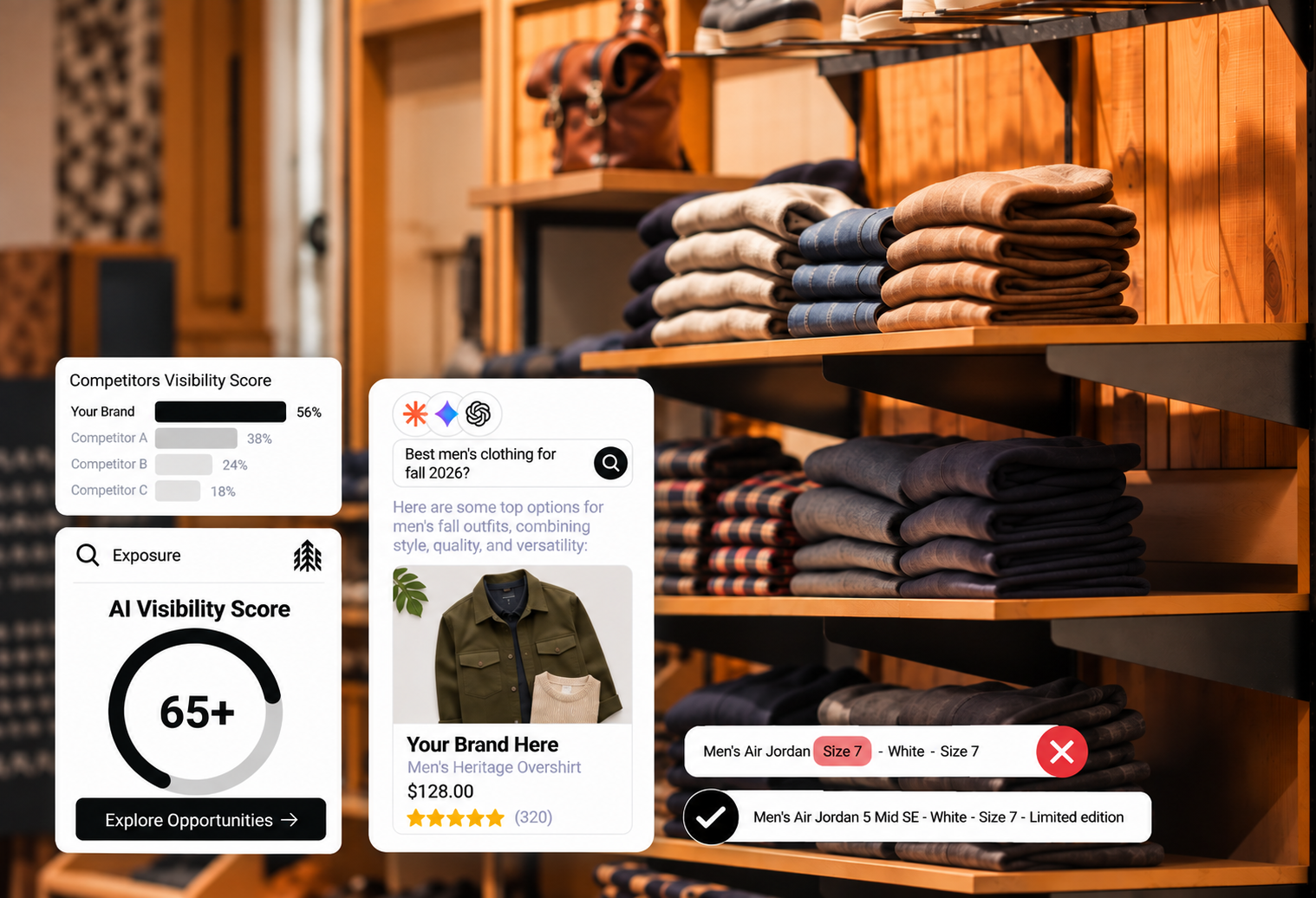

Inside The Strategy How It Works
Ecommerce SEO is how your online store earns qualified visibility when buyers search for the products you sell. This is how you capture more of that search demand, take market share from competitors, and, with consistent resourcing over time, build dominant visibility within your market.
Search engines remain the foundation of ecommerce SEO services, but the authority, relevance, content, and brand signals built through effective ecommerce SEO also strengthen how your products and business are discovered across AI platforms, social search, and an expanding digital ecosystem.
Properly optimized and structured ecommerce SEO syncs how people search for products with how your site delivers what they searched for. Category structure, product pages, internal linking, content, technical SEO, structured data, and other signals work together to help search engines efficiently crawl, understand, index, and rank what matters most. Those same signals create ancillary value across platforms increasingly responsible for product research and discovery.
The objective isn’t simply more organic traffic. It’s more qualified buyers discovering the products you sell, wherever they search, and turning that visibility into revenue.
Ecommerce SEO starts with search intent: what people are searching for, how they are searching for it, and which of those searches represent the greatest opportunity to sell your products. That intelligence dictates how categories are structured, which products deserve priority, what content needs created, and where your investment produces the greatest commercial return.
From there, ecommerce SEO services connect search demand with execution. Technical SEO ensures search engines efficiently crawl and index your store, while category and product optimization establishes relevance around the searches that matter. Internal linking distributes authority, structured data provides additional product context, and content expands the number of relevant searches your business competes for.
An ecommerce SEO consultant also looks beyond organic search for intelligence that strengthens the strategy. Paid search data exposes converting keywords, social media reveals how people discuss and discover products, and conversion data identifies where traffic becomes revenue. SEO authority strengthens the entire domain. Ecommerce SEO works best when these insights are shared across mediums and continuously used to make the organic strategy smarter and efficient.
When you market efficiently, you market effectively.
Your products cannot generate revenue if qualified buyers never find them. And when your competitors consistently own the searches surrounding those products, they aren’t simply outranking you; they’re capturing customers and market share that could have been yours.
Ecommerce SEO services position your online store to compete for that search demand across product, category, brand, comparison, and short- and long-tail searches throughout the buying journey. Unlike paid media, where visibility largely stops when spending does, organic authority compounds as your site earns the footprint you need—rankings, relevance, links, engagement, and credibility over time.
An ecommerce SEO consultant also identifies where adjacent digital marketing mediums strengthen that investment. PPC provides conversion and keyword intelligence, social media expands product discovery and brand signals, content builds topical authority, and CRO turns more qualified organic traffic into customers. Ecommerce SEO creates the organic foundation; the broader omnichannel strategy increases what that foundation produces.
If you sell products online, ecommerce SEO is your most important marketing medium for long-term sustainable success. As you grow, so should your resourcing to this strategy. Whether you sell hundreds of products or a highly specialized handful, buyers are searching for what you offer, comparing alternatives, researching brands, and deciding who gets their business. Your opportunity is determined by how much of that relevant search demand your business captures.
Ecommerce SEO services are built for direct-to-consumer brands, online retailers, manufacturers selling direct, B2B ecommerce businesses, subscription businesses, marketplaces, and companies operating both online and through physical locations. The strategy scales around the business, product catalog, competitive environment, margins, geography, and search opportunity rather than requiring a specific store size.
An ecommerce SEO consultant becomes particularly valuable when paid acquisition costs continue climbing, organic growth has stalled, a large product catalog creates technical complexity, or competitors consistently outrank your products and categories. Search is the game of how customers discover, research, compare, or purchase what you sell. Ecommerce SEO is the MVP of your marketing team. It’s the single most important thing to get sound and execute to perfection.
Ecommerce SEO moves your business from we sell great products to this is a leader in the category, this is who I trust, and this is where I want to buy. The stronger that position becomes, the more search demand, market share, and revenue your business captures.
As one of the lowest cost-per-acquisition channels in digital marketing, ecommerce SEO services build value that compounds. Rankings, authority, content, links, credibility, and product visibility work together to earn the buyer’s attention; the real opportunity is what your business does with it. Why this product? Why buy from you? Does it fit my needs? What makes it better? What do other customers say? How quickly will I get it? From product advantages and reviews to first-time buyer offers, price matching, guarantees, and return policies, ecommerce SEO gives your strongest selling points more opportunities to be found precisely when they influence the sale.
And that opportunity no longer ends with traditional search. Stronger product information, structured data, reviews, content, brand authority, and digital signals increase your prevalence across AI citations and mentions, social search, and other product-discovery mediums. An ecommerce SEO consultant connects those opportunities across the larger marketing strategy so each medium strengthens the next. You aren’t simply optimizing an online store to rank; you’re building a digital sales engine designed to be found, earn trust, outperform competitors, and sell more products.
Why It Matters
Why Optimized ecommerce SEO Services Are A Must
The insights don’t lie. You want to lower CAC, convert new traffic at a significantly higher rate than paid traffic, and own digital real estate outside of AI Overviews, where nearly 97% of Google shopping searches still take place. The average ecommerce business executing SEO effectively builds exposure across nearly 2,000 ranking keywords. If there is one marketing medium ecommerce owners need to invest in, it’s this.
On average, ecommerce businesses save $15,000–$18,000 a month in advertising using ecommerce SEO. That’s the average. The larger the business, the larger the ad spend savings, the lower your acquisition costs, and the more revenue you capture through higher-converting organic traffic. This means one thing: your profit margins dramatically improve.
96.8%
of Google shopping searches exclude AI Overviews, leaving ecommerce SEO critical to product discovery.
1,783
Average ranking keywords across ecommerce SEO campaigns, generating 9,625 organic monthly visits.
129%
organic traffic converts higher than paid search, and not by a little.
41%
Lower overall CAC for ecommerce brands prioritizing organic acquisition, despite industry CAC rising 60% over five years.
What’s the framework to successful ecommerce SEO?
An ever-evolving ecosystem built for sustainable growth.
This long-term strategy is multifaceted, but when it works in concert, the payoff is consistent and compounding.
Technical SEO
- Site Architecture & Metadata
- Crawlability & Indexability
- XML Sitemaps & Robots.txt
- Core Web Vitals & Page Speed
- Mobile Optimization
- Structured Data
- Canonical Tags
Category & Product Optimization
- Category architecture
- Category-page SEO
- Product-page optimization
- Transactional keyword targeting
- Product titles and descriptions
- Metadata optimization
- Image optimization
- Internal linking
- Product variants
- Commercial search intent
Authority, Trust & Digital PR
- Backlinks & Digital PR
- Brand Mentions & Citations
- Domain Authority & Trust Signals
User Experience & Conversion Optimization
- Ecommerce User Experience (UX)
- Conversion Rate Optimization (CRO)
- Product Page UX
- Category Page UX
- Navigation & Site Search
- Product Filters & Faceted Navigation
- Mobile Shopping Experience
- Cart & Checkout Optimization
- Calls-To-Action
- Conversion Tracking
Content Strategy & Topical Authority
- Buying guides
- Product comparisons
- FAQs
- Supporting informational content
- Long-tail keyword targeting
- Topical clusters
- E-E-A-T
- Internal linking
- Informational-to-commercial content
Performance & Growth Metrics
- Organic Revenue
- Organic Transactions
- Search Visibility
- Ecommerce Conversion Rate
- Customer Acquisition Cost
- Average Order Value
- Revenue Per Visitor
- Assisted Conversions
- Category & Product Performance
- Revenue Growth
AI Search & Product Discovery
- Google AI Overviews
- ChatGPT
- Gemini
- Claude
- Perplexity
- Entity optimization
- Product and merchant structured data
- Brand and product mentions
- AI citations
- Reviews and trust signals
- AI-driven product discovery
Analytics, Reporting & Search Intelligence
- Google Analytics
- Google Search Console
- Keyword Tracking
- Rank Monitoring
- Attribution
- Performance Reporting
- Search Insights
- Competitor Analysis
- Market Intelligence
FAQs Ecommerce SEO Services
What Is Ecommerce SEO and How Is It Different From Traditional SEO?
Ecommerce SEO is search engine optimization built specifically around the way online stores compete, rank, and sell products. The fundamentals of SEO still apply, but ecommerce introduces an entirely different level of complexity across product catalogs, category structures, variants, faceted navigation, inventory changes, duplicate content, structured data, internal linking, and search intent.
More importantly, ecommerce SEO services connect that technical ecosystem directly to how people shop. Buyers search by product, category, brand, problem, feature, use case, price, comparison, and countless long-tail variations before making a purchase. Your strategy needs to position the right page against each opportunity while giving buyers compelling reasons to choose your product and business once they arrive.
An ecommerce SEO consultant brings those disciplines together around one objective: profitable organic growth. Rankings and traffic matter, but revenue is king.. Ecommerce SEO builds the visibility, authority, relevance, and digital real estate necessary to capture qualified demand while strengthening an acquisition channel your business owns.
What Are the Biggest Ecommerce SEO Mistakes to Avoid?
The largest mistake is assuming that because ecommerce SEO information is available, the expertise to execute it correctly is equally accessible. It isn’t. Architecture, indexing, product and category optimization, content, authority, UX, analytics, conversion, and a multitude of other cobweb like disciplines make ecommerce SEO an extremely in-depth, continuously evolving ecosystem.
Trying to nickel-and-dime the work or execute everything internally without the necessary acumen costs you on both ends. You spend time and resources learning and implementing tactics while risking technical mistakes, missed opportunities, conflicting optimizations, and strategies you may never realize are incomplete. Meanwhile, competitors earn the rankings, authority, customers, and market share.
The most expensive part is often what you never see: revenue you could have captured, acquisition costs you could have lowered, and organic positions you allowed competitors to compound while you tried to figure it out. Hiring an experienced ecommerce SEO consultant isn’t paying someone to perform SEO tasks. You’re investing in the acumen and proven best practices to know what matters, what doesn’t, what comes next, and how the entire ecosystem works together to produce the results you seek.
Does Ecommerce SEO Increase Sales and Revenue?
That is the point. If any marketing medium doesn’t, what are you investing in? Ecommerce SEO isn’t an exercise in generating traffic; it’s an investment in capturing people actively searching for products your business sells and turning more of that existing demand into revenue.
Effective ecommerce SEO services expand the number of relevant searches your products and categories compete for while improving their position within them. That creates more opportunities to put your products, reviews, differentiators, offers, shipping advantages, guarantees, and other selling points in front of qualified buyers precisely when those details influence a purchase. You need to be where your customers search, when they search.
The payoff becomes incredibly lucrative over time. Paid media purchases visibility one click at a time. Organic rankings, content, links, authority, and relevance continue producing value after the initial investment that created them. As that footprint compounds, ecommerce businesses gain the opportunity to generate more transactions without acquisition costs rising proportionately alongside revenue.
Traffic without sales accomplishes little. The objective of ecommerce SEO is qualified visibility that lowers acquisition costs, captures market share, and produces sustainable bottom-line growth.
How Long Does Ecommerce SEO Take to Work?
Ecommerce SEO is a long-term growth strategy, not an overnight acquisition tactic. Initial movement can begin within weeks or months, but meaningful results are relative to your goals and your investment. They commonly require six months to kickstart, while stronger competitive positions and the compounding financial value of SEO are built over, twelve, and eighteen-plus months. Whether you look into ROI from traditional SEO or ecommerce SEO, the longer you’re in it, the longer you’re succeeding. In my career for sixteen plus years, I have seen most clients hit their largest growth spurts, seeing unprecedented revenue and rankings between years three and four.
The timeline depends heavily on where the business starts, your products, competition, and investment. Domain authority, technical health, industry and niche competition, catalog size, existing rankings, content, backlinks, previous SEO work, available resources, and the aggressiveness of the strategy all influence how quickly an ecommerce SEO consultant can move the needle. A technically sound established retailer and a new store entering a saturated category are not starting the same race.
This is why consistency matters. SEO gains leverage as optimized pages mature, authority grows, additional keywords rank, content expands your search footprint, and stronger performance creates more data to guide the next investment. Businesses that resource ecommerce SEO consistently give themselves time to build an advantage competitors cannot immediately buy or replicate.
Can Ecommerce SEO Reduce Reliance on Paid Advertising?
Absolutely, and this is one of its strongest financial arguments. Ecommerce SEO gives businesses another scalable acquisition engine so every new customer doesn’t require another paid click. Your goal should be sweet spots across marketing spend and fueling what works. Simply put, if your CPA from ecommerce SEO surfaces a 120% margin, and your CPA from paid ads surfaces a 70% margin, they both work. Would you rather sell 1k units at 120% margin or 70%?
Paid advertising remains extremely valuable, particularly for immediate demand capture, promotions, product launches, retargeting, and conversion intelligence. The problem begins when paid media becomes the business’s oxygen supply. Costs rise, competition increases, budgets tighten, and the moment spending stops, most of that visibility disappears with it.
Ecommerce SEO services change those economics by building organic positions around the same products and commercial searches businesses otherwise pay to access. As qualified organic traffic and revenue grow, businesses gain greater control over blended CPA and CAC while creating room to use paid media more strategically rather than depending on it for nearly every transaction.
The strongest ecommerce businesses don’t need SEO to replace PPC. They use both intelligently. Any and every business, ecommerce or otherwise should be investing in omnichannel marketing efforts. It’s not this vs. that, it’s what 4-6 mediums provide me the best ROI from our collective business perspective and goals for the company. Paid media captures demand immediately; SEO builds an asset that increasingly captures demand without paying a toll on every visit.
How Does AI Search Affect Ecommerce SEO?
It’s built and building a new area of digital real estate businesses need to take seriously and get placed in. AI is changing product discovery, but it isn’t eliminating the need for ecommerce SEO. It is expanding the number of places where the authority, relevance, product information, reviews, structured data, content, and brand signals created through SEO influence whether your business gets found, cited, mentioned, or recommended.
Commercial search tells a very significant story. Google AI Overviews appear in only 3.2% of shopping searches, meaning 96.8% remain untouched by AI Overviews. Traditional organic visibility across product and category searches remains firmly intact and critically important. At the same time, ChatGPT, Gemini, Perplexity, social platforms, and other discovery mediums are creating additional opportunities for your products and business to be researched, compared, cited, mentioned, and recommended.
That makes strong ecommerce SEO services more valuable, not less. Search engines remain the foundation, while the signals built there create ancillary opportunities throughout the broader discovery ecosystem. An ecommerce SEO consultant now has to think beyond a single SERP and build the digital prevalence that positions products and brands wherever customers research what to buy and who to buy it from.
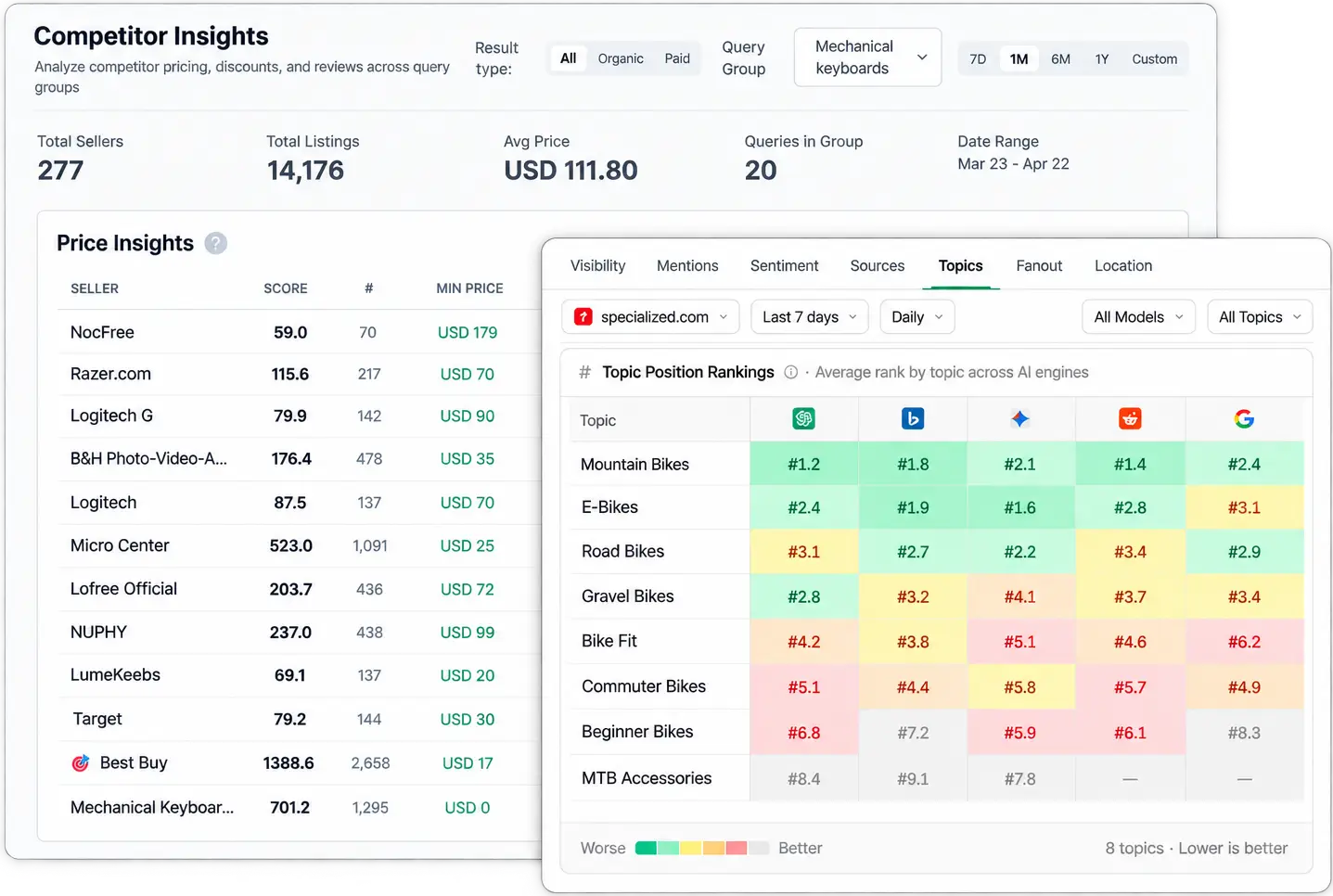
Here’s The Benefits
Results Your Business Should Expect
- INCREASED Sales
- INCREASED Reach
- INCREASED Thought-Leadership
- INCREASED Conversion
- INCREASED Brand Awareness
- INCREASED Trust
- INCREASED Review Acquisition
- INCREASED Authority

Testimonials
“Bradley has been a complete asset to the growth and optimization of our international social media and digital marketing efforts. He is very diligent, analytical and detailed, he is well researched and comes with a very high level of focus”
Mike Chawla
Owner, iTailor
“Every step calculated, every implementation strategic, and his focus is just as zeroed in on the long term goal as the short term. Understanding the granular details and "why's" all while making sure every touch point is focused on conversion, operates ethically, and is fluidly legal”.
Nick Leber
CPO, Umbrella Digital
“I’ve worked with a lot of self-proclaimed “digital gurus” (thankfully, Bradley doesn’t call himself that) and they pale in comparison to Bradley and his knowledge of digital strategy.”
Kyle Creek
"The Captain" / Author
“Bradley has an impressive sense of discipline and offers a strategic approach to every problem he faces. He is well researched, very responsible and brings an international business acumen that spans many demographics”
Archie Smith III
Sr. Program Manager, Microsoft
"Always focused on results and the overall goal and how to serve clients in the most efficient and effective manner possible. He takes a very calculated approach to all inbound strategies he employs. Responsible, disciplined, and responsive - I truly enjoy working with him on numerous accounts.”
Andrea Norris
Accounts Director, USA - Online Marketing Gurus
“His passion for digital marketing is second to none, and his experience working for Inc. 500 agencies, Fortune 100 companies, and international brands speaks volumes. His approach is zeroed in on efficiency and effectiveness. The word “expert” is not something I use lightly. However, Bradley is in fact an expert at digital marketing and I consider myself lucky to have him in my network.”
Jason Case
CEO ROC
“He takes the guesswork out by doing in-depth research and analysis on our client’s online footprint as well as their competitors and presents unfound opportunities to set them on the right path forward. A great problem solver and always has the bottom line and ROI in mind when presenting the best solutions for BRAND or any of our clients.”
Virginia Martino
Owner BRAND
"Bradley’s knowledge, skill and ability to communicate the complex with just the right amount of insight educates and brings clarity to each progressive stage of increasing our digital presence. Questions are answered with energy and intelligence and Bradley aligns his strategies with our business vision and goals seamlessly"
Susan & Greg Holmes
Owners Yoga Holmes
“Bradley is a great person to do business with. His hard work, dedication and detailed focus is difficult to find these days.”
Nick Kaptain
CEO Adlava