

AI SEO services that futureproof authority, expand reach and drive revenue.
The AI search ecosystem is evolving rapidly across platforms, models, and search experiences, creating an entirely new layer of digital visibility businesses must account for. Traditional SEO acumen alone does not guarantee your business will be understood, cited, or recommended within AI-generated answers. Generative Engine Optimization services bring specialized strategy, technical acumen, and proven best practices designed specifically for how AI systems discover, interpret, and surface information. AI SEO services position your business to earn greater visibility, authority, and reach wherever your customers increasingly search.
Your Growth Starts Here
Remove the guesswork, leverage actionable data – then monetize it
TL;DR: The Quick Summary
How AI SEO services create growth
What makes AI SEO work
TL;DR: The Quick Summary
How AI SEO services create growth
What makes AI SEO work
The importance of AI SEO
Search has new digital real estate. Make sure you own it.
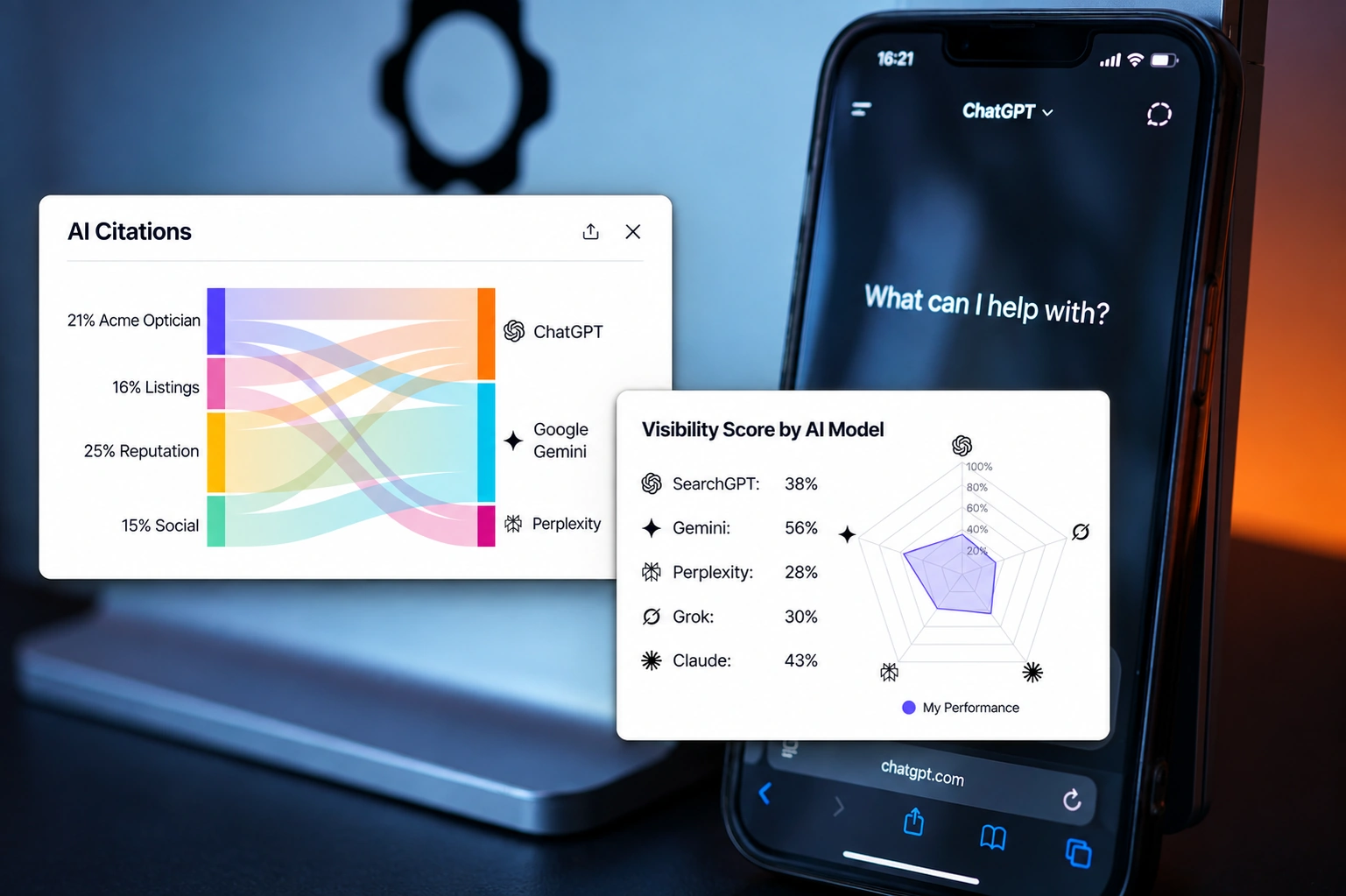
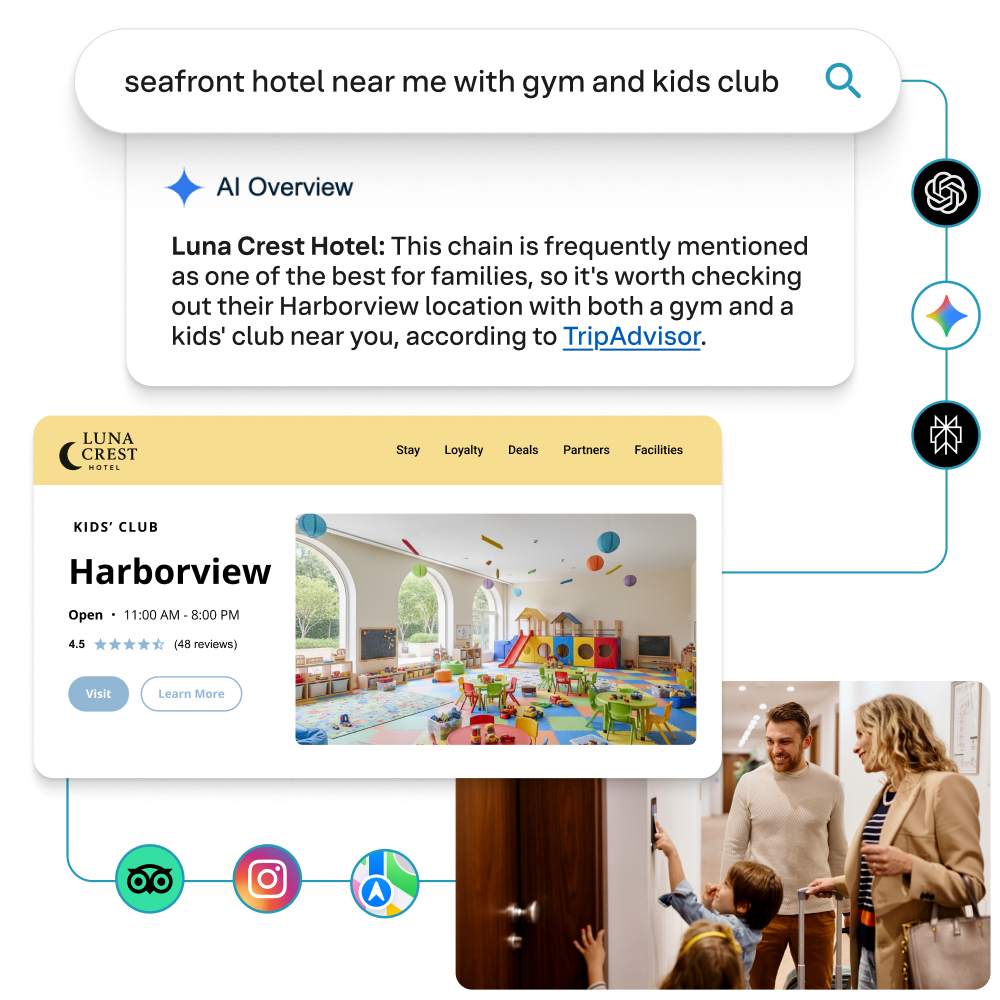
AI search answers the questions your customers are already asking; who’s the best, who to trust, what should I buy, which business provides the solution I need, and so much more. Increasingly, those answers are being generated inside Google AI Overviews, ChatGPT, Gemini, Claude, Perplexity, and other AI-powered search experiences. AI SEO services position your business to be understood, referenced, cited, and recommended within those answers.
The best Generative Engine Optimization services expand your digital real estate beyond traditional search rankings, building the authority and visibility AI systems need to confidently surface your business. SEO earns your position in search. AI SEO helps ensure your business earns a position in the answer.
Pro Tip: Pair it with Local SEO, SEO, and UX & CRO efforts

Inside The Strategy How It Works
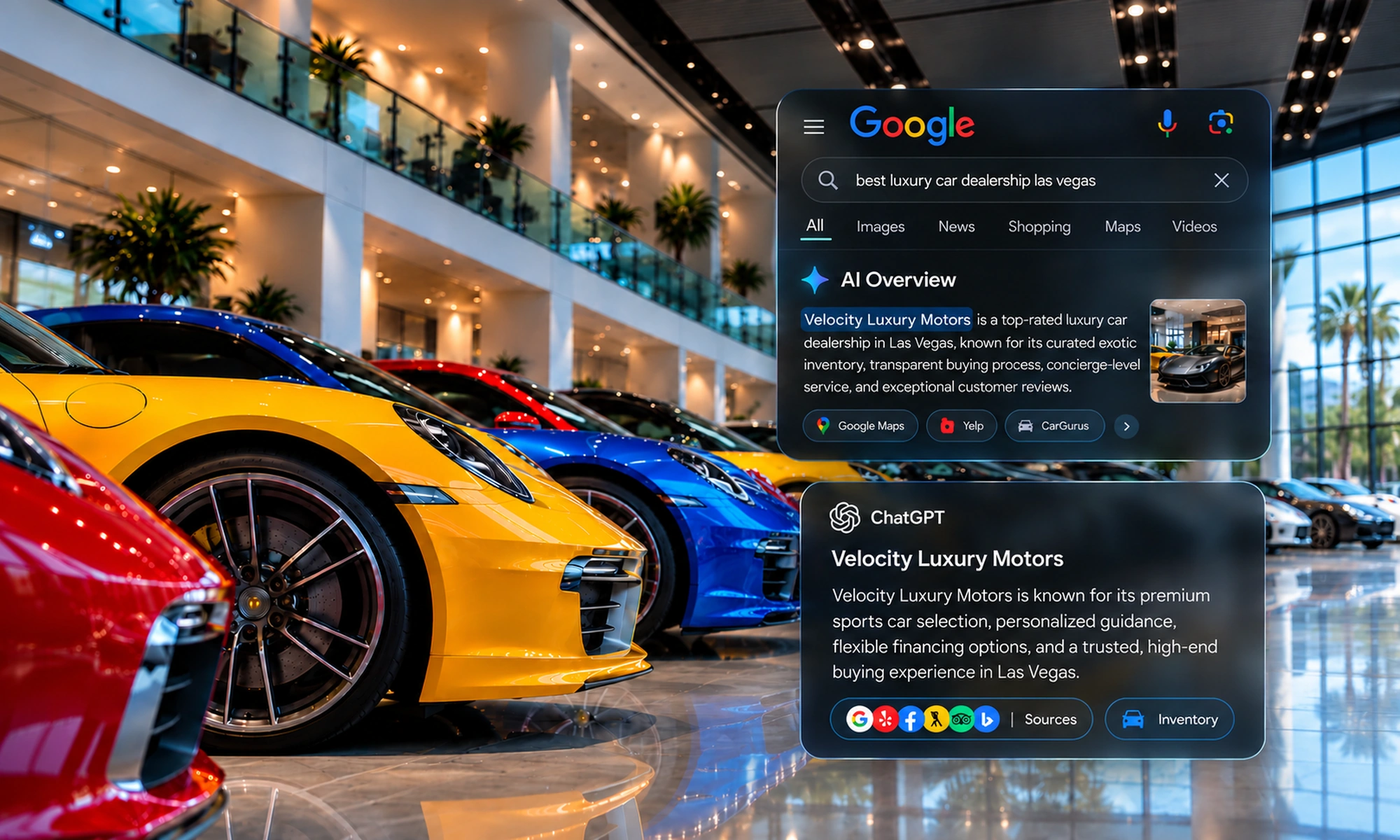
AI SEO services help businesses increase visibility across AI-powered search engines, generative search experiences, and large language models. Often referred to as Generative Engine Optimization (GEO) or Answer Engine Optimization (AEO), the strategy focuses on helping AI systems better discover, understand, trust, reference, and recommend your business.
When customers ask questions through Google AI Overviews, ChatGPT, Gemini, Claude, Perplexity, and other AI platforms, those systems evaluate enormous amounts of information to determine which sources and businesses deserve inclusion within the answer. AI SEO strengthens the content, entities, authority signals, structured information, and digital presence these systems use to make those decisions.
Traditional SEO builds the foundation for discoverability across search. AI SEO services extend that foundation into generative search, helping your business compete for visibility within search results and the answers themselves.
AI SEO works by strengthening the signals AI systems use to understand what your business is, what it offers, where its authority exists, and when it should surface as a relevant source or recommendation.
Generative Engine Optimization services combine technical accessibility, entity optimization, structured data, topical authority, content development, citations, brand mentions, and third-party validation to create a clearer digital footprint. Content must also be structured so AI systems can efficiently retrieve, interpret, summarize, and reference the information your business provides.
Many of these signals overlap with traditional SEO, but the desired outcome expands beyond earning a search ranking. AI search optimization increases the likelihood your business is retrieved, cited, mentioned, or recommended when generative engines construct an answer.
No business can dictate what an AI model says. The strategy is to give these systems substantially more reason to choose you.
Your customers no longer need to visit ten websites to compare ten businesses. AI-powered search can research, summarize, compare, and recommend those businesses within a single conversation.
That changes the digital real estate your business is competing to own.
AI SEO services help position your business inside this emerging discovery process, where visibility can influence a customer before a traditional website visit ever occurs. Strong Generative Engine Optimization builds the authority, relevance, and machine-readable context AI systems need to confidently associate your business with the products, services, questions, and solutions your customers are searching for.
Traditional SEO remains a major part of search visibility, but rankings alone no longer represent the entirety of it. As AI-generated answers consume more of the search experience, businesses need a strategy for earning visibility within both search results and the generated answer.
AI SEO services are relevant to virtually any business whose customers research, compare, evaluate, or discover products and services online. That includes B2B companies, ecommerce brands, professional services, healthcare organizations, law firms, financial institutions, manufacturers, software companies, national brands, and businesses operating across multiple markets.
The opportunity becomes especially important when purchasing decisions require research. Prospective customers increasingly use AI platforms to compare providers, understand products, evaluate alternatives, research pricing, identify industry leaders, and narrow their consideration set before contacting a business.
For businesses dependent on geographic customers, Local SEO remains a core component of maps and location-based discovery. AI SEO adds another layer, strengthening how the business and its authority are understood when AI platforms answer geographically relevant questions or recommend providers.
If your customers can ask AI about what you sell, AI visibility matters.
The benefits of AI SEO extend beyond earning a citation inside ChatGPT or appearing within a Google AI Overview. Effective AI SEO services expand the digital real estate your business can occupy while strengthening the underlying authority, content, entities, and trust signals that support visibility across the broader search ecosystem.
Generative Engine Optimization can increase AI citations and mentions, strengthen brand authority, expand reach across emerging search experiences, improve visibility during research and consideration, and create additional opportunities for qualified traffic and revenue. Because GEO, AEO, and most importantly traditional SEO share important foundational signals, improvements made for AI visibility can also reinforce broader organic search performance.
The larger advantage is positioning. Search behavior will continue to evolve, platforms will change, and new AI experiences will emerge. Building a digital presence machines can confidently understand, validate, retrieve, and recommend gives your business a stronger foundation wherever search moves next.
Why It Matters
Why Optimized AI SEO Services Are A Must
AI search is creating a new revenue stream, and businesses investing today have a rare opportunity: getting in early. Think of Generative Engine Optimization like buying stock pre-IPO — the digital real estate is developing, competition is taking shape, and authority built now will compound and bear fruit for years.
AI SEO services extend proven search strategies into Google AI Overviews, ChatGPT, Gemini, Perplexity, Claude, and other generative experiences. SEO created one of digital marketing’s most valuable acquisition channels. GEO gives businesses the opportunity to get ahead of the next one.
2.5x
the likelihood users visit websites recommended by AI
55.9%
of AI-influenced visitors ultimately arrive through search.
94%
of the U.S. AI users would consider a brand they'd never heard of if recommended by AI.
2x
deeper site engagement (time on site, pages visited) from AI-influenced website visitors
What’s the framework to successful AI SEO?
A brand new ecosystem but highly rewarding long-term.
Technical AI Search & Accessibility
- Crawlability & Indexability
- Structured Data & Schema
- Site Architecture & Internal Linking
- AI Crawler Accessibility
- Technical SEO
- Page Performance
Entity & Knowledge Optimization
- Entity Recognition & Relationships
- Brand, Product & Service Entities
- Knowledge Graph Signals
- Organization & Author Identity
- Entity Consistency
- Semantic Relationships
Content, Answers & Topical Authority
- Search Intent & Query Mapping
- Question & Answer Content
- Topic Clusters & Content Depth
- E-E-A-T & Topical Authority
- Definitions, Comparisons & Supporting Evidence
- Conversational & Long-Tail Search
Authority, Third-Party Mentions & Brand Signals
- Authoritative Backlinks
- Third-Party Brand Mentions
- Digital PR & Earned Media
- Citations & Local SEO Signals
- Reviews & Reputation
- Community & Industry Sources
Retrieval, Citations & AI Visibility
- Retrieval & Source Selection
- AI Citations & Source Attribution
- Brand Mentions
- Answer Inclusion
- Recommendation Visibility
- Citation Prominence
- Generative Search Visibility
AI Platforms & Performance Measurement
- Google AI Overviews & AI Mode
- ChatGPT
- Gemini
- Perplexity
- Claude
- DeepSeek
- AI Visibility & Citation Tracking
- Prompt & Query Monitoring
- Competitor AI Visibility
- Referral Traffic & Conversions
AI SEO vs. Traditional SEO
FAQs AI SEO Services
How Is AI SEO Different From Traditional SEO?
Traditional SEO provides businesses one of the highest-value acquisition channels across digital marketing. AI SEO expands that opportunity into generative search, creating another avenue to reach customers, influence consideration, and drive revenue before they ever click a traditional search result.
Traditional SEO builds visibility across organic search. AI SEO services leverage many of those same investments to help your business become understood, retrieved, cited, mentioned, and recommended when AI platforms construct answers.
There is considerable overlap. Technical SEO, content quality, backlinks, topical authority, structured data, internal linking, E-E-A-T, and third-party validation strengthen both. The difference is the additional digital real estate those signals are being optimized to capture.
Generative Engine Optimization (GEO) focuses specifically on earning visibility within generated responses. Answer Engine Optimization (AEO) strengthens the ability for your information to be extracted and surfaced as an answer. AI SEO encompasses the larger opportunity across both disciplines and the traditional search signals supporting them.
SEO positions your business where customers search. AI SEO expands that position into the answers increasingly influencing what they discover, consider, and buy.
Can AI SEO Hurt Traditional SEO Performance?
No. Proper AI SEO efforts strengthen your overall organic visibility while creating another channel capable of producing reach, customers, and revenue. Think of traditional SEO as your nightclub and AI SEO as the banquet business operating from the same venue: same infrastructure, same bottom-line objective, two different revenue opportunities.
The overlap is substantial. Authoritative content, technical accessibility, clearly defined entities, credible sources, logical site architecture, structured data, backlinks, and strong third-party signals contribute to both traditional and AI search visibility.
Problems arise when businesses mistake AI optimization for shortcuts. Manufacturing brand mentions, overusing schema, publishing thin content around every imaginable prompt, or restructuring pages exclusively for machine extraction isn’t sound AI SEO any more than keyword stuffing is sound traditional SEO.
The objective is expansion. AI SEO services should leverage and strengthen the search equity your business already owns while creating more opportunities to be discovered across ChatGPT, Gemini, Perplexity, Google AI experiences, and other emerging platforms.
Your business doesn’t need to choose between proven and emerging digital real estate. It should compete for both.
Why Is My Brand Ranking in Google but Missing From AI Recommendations?
Because ranking well in Google and being recommended by AI are not the same achievement. If your business owns valuable organic positions but competitors are capturing AI recommendations, part of the authority you’ve built is not yet producing all the reach and opportunity it can.
A strong organic ranking demonstrates relevance and authority for a particular search. Generative engines can look beyond that ranking when deciding which businesses to mention, compare, cite, or recommend.
Entity relationships, contextual brand mentions, reviews, authoritative publications, citations, community discussions, product and service information, topical associations, and consistency across independent sources can all strengthen the external evidence surrounding your business.
The equation becomes more complex because ChatGPT, Gemini, Perplexity, Claude, DeepSeek, and Google AI experiences do not retrieve, interpret, or surface information identically. Strong visibility within one does not automatically transfer to another.
Generative Engine Optimization addresses that gap. You’ve already invested in building authority; GEO works to expand where that authority produces visibility, putting your business into more of the conversations shaping customer decisions.
Do I Need AI SEO if My Traditional SEO Is Already Strong?
Yes. Strong traditional SEO is never a reason to ignore AI SEO, and AI SEO certainly cannot replace the organic visibility and revenue SEO already produces. If anything, businesses with established search authority have more existing equity to leverage into this additional area of customer discovery.
Years of SEO may have already built crawlable content, backlinks, topical authority, brand recognition, structured information, and search equity. Those assets create an excellent foundation, but they do not guarantee your business will be retrieved, cited, compared, or recommended when an AI engine constructs an answer.
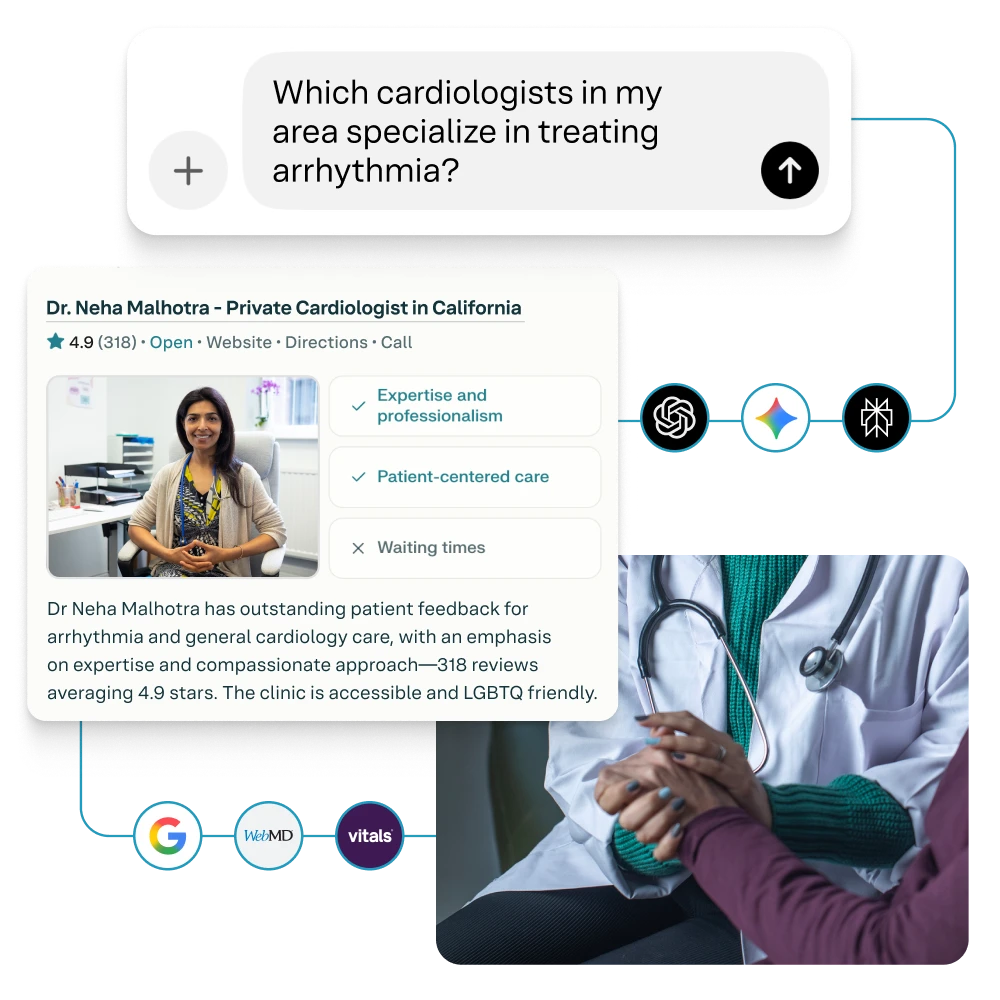
That matters because your customer’s research journey has expanded. Someone can ask an AI platform to identify providers, compare products, summarize reviews, evaluate alternatives, or recommend a solution without navigating traditional organic results at all.
AI SEO services extend existing authority into that behavior. Instead of rebuilding your digital presence from scratch, Generative Engine Optimization gives the investments you’ve already made another opportunity to generate reach, consideration, traffic, and revenue.
You earned your position in search. There is no business reason to stop competing where search goes next.
GEO: Strategy, Visibility, & Performance
FAQs AI SEO Services
What Makes a Business More Likely to Be Cited or Recommended by AI?
Authority earns consideration. The more credible evidence AI systems can find, understand, and corroborate about your business, the stronger your opportunity becomes to earn citations, recommendations, and the additional reach those placements can create.
Think about how you recommend a business yourself. A business can tell you it’s exceptional, but reviews, respected publications, industry recognition, customer conversations, and people you trust make that claim substantially easier to believe. AI systems similarly encounter both what your business says about itself and what the broader digital ecosystem can substantiate.
That evidence can include technical accessibility, entity clarity, topical relationships, content structure, source authority, third-party corroboration, backlinks, independent brand mentions, reviews, citations, digital PR, supporting evidence, contextual relevance, and consistency across authoritative sources.
Those signals do not operate independently or carry identical influence across ChatGPT, Google, Gemini, Perplexity, Claude, DeepSeek, and other generative engines. The query itself can also change which sources and signals become relevant.
Generative Engine Optimization services build and coordinate that digital evidence. Telling AI your business deserves visibility is easy. Giving it enough reason to confidently choose your business is where the real work begins.
Do Backlinks and Third-Party Mentions Still Matter for AI Search?
Absolutely. Backlinks and third-party mentions can now create value beyond organic rankings, helping establish the independent authority AI systems can use when deciding which businesses deserve to be cited, surfaced, or recommended.
For traditional SEO, an authoritative backlink can strengthen the authority flowing to your website. Within GEO, the surrounding context creates another layer of value: where your business appears, what subjects it is associated with, how credible sources describe it, and whether independent information corroborates your own claims.
Industry publications, reputable directories, professional associations, reviews, Reddit discussions, Quora answers, news coverage, research, digital PR, and other external sources all contribute to the larger digital footprint surrounding a business.
For geographically dependent businesses, Local SEO citations and reputation signals create another valuable intersection. Consistent information across trusted sources reinforces who your business is, where it operates, what it provides, and how the market recognizes it.
Authority has always created visibility online. AI search expands the number of places where earning that authority can pay your business back.
Does Schema Markup Help With AI SEO and GEO?
Yes. Schema gives search engines and AI systems clearer, structured information about your business, strengthening machine understanding and creating another opportunity for your products, services, people, locations, and content to be accurately interpreted.
Think of your website as explaining your business in English while schema provides machines a labeled version of the same information. Organization, person, product, service, review, article, location, and other structured data can explicitly define information and relationships that machines might otherwise need to infer from content alone.
But clarity is not credibility. Schema cannot manufacture the authority required to make a business worth citing or recommending.
That authority develops across a much larger foundation involving crawlability, entity development, content architecture, internal linking, topical depth, external validation, backlinks, citations, and third-party signals. Structured data helps machines interpret those assets; it does not replace them.
For AI SEO and GEO, schema helps establish what your business is and how its information connects. Authority and corroboration help establish why it deserves visibility.
How Do You Measure AI SEO or GEO Performance?
Like traditional SEO, there are numerous ways to measure success in this medium. New website visitors, new customers and bottom-line impact matter most, while increased citations, mentions, AI visibility and brand authority provide the foundation that helps create that new traffic and converted revenue.
Performance can include AI citations, brand mentions, recommendation frequency, prompt visibility, citation prominence, competitor share of voice, AI referral traffic, assisted search behavior, engagement, conversions, and revenue. Those signals can then be evaluated across the platforms, topics, products, services, and commercially relevant queries your customers actually use.
Attribution makes the analysis considerably deeper than counting referrals. A prospective customer could discover your business through ChatGPT today, research it elsewhere tomorrow, Google your brand next week, and ultimately convert through organic search. Last-click attribution may credit Google while completely overlooking the AI interaction that created the customer.
That makes digital marketing data analysis increasingly important to GEO. Visibility tells you whether your business is appearing. Analysis determines how that visibility influences discovery, consideration, acquisition, and ultimately growth.
Can AI SEO Improve Visibility in ChatGPT, Gemini, Perplexity and Google AI Overviews?
Yes. It’s the exact result your business is looking for from these efforts. The road to more mentions, citations and recommendations across Google AI Overviews, ChatGPT, Gemini, Claude, Perplexity and DeepSeek runs directly through AI SEO.
AI SEO services strengthen the signals these platforms use to discover, understand, validate, retrieve and ultimately surface your business. The objective isn’t abstract: when your customers ask AI about the products, services, solutions or businesses they need, you want your business competing to be part of the answer.
These platforms do not operate as one universal search engine. Their models, retrieval systems, source selection, citations, available data, and generated responses differ. Your business can appear prominently for one prompt or platform and remain completely absent from another.
That fragmentation makes a broader Generative Engine Optimization strategy more important, not less. Technically accessible content, clearly established entities, relevant subject matter, authoritative mentions, independent validation, citations, and a consistent digital presence create stronger signals across the AI search ecosystem.
You cannot dictate the answer an AI engine generates. You can substantially strengthen the reasons it has to include your business in one.
Does AI SEO Require a Long-Term Contract?
No. But if agreement length is your primary focus, we probably won’t be a great fit. We work best with businesses focused on the goals they want to attain and willing to give the strategy the resources and runway required to attain them.
Markets, competition, existing authority and business objectives dictate how an AI SEO strategy needs to evolve, and resources are pivotal to its success. Some businesses begin with considerably more digital equity to leverage; others require deeper technical, content, entity, citation and authority development before comparable visibility can be earned.
That means the appropriate engagement should follow the strategy, not the other way around. A concentrated initial phase may uncover and address immediate opportunities, while larger competitive gaps or more ambitious growth objectives can require continued Generative Engine Optimization as authority and visibility develop.
AI search also continues to move. Platforms evolve, competitors gain citations, customer prompts change, sources gain or lose influence, and new search experiences emerge. Continued measurement tells us where your business is gaining ground and where additional digital real estate remains available.
The contract should never dictate the strategy. Your goals should.
Here’s The Benefits
Results Your Business Should Expect
- INCREASED Sales
- INCREASED Reach
- INCREASED Thought-Leadership
- INCREASED Conversion
- INCREASED Brand Awareness
- INCREASED Trust
- INCREASED Review Acquisition
- INCREASED Authority

Testimonials
“Bradley has been a complete asset to the growth and optimization of our international social media and digital marketing efforts. He is very diligent, analytical and detailed, he is well researched and comes with a very high level of focus”
Mike Chawla
Owner, iTailor
“Every step calculated, every implementation strategic, and his focus is just as zeroed in on the long term goal as the short term. Understanding the granular details and "why's" all while making sure every touch point is focused on conversion, operates ethically, and is fluidly legal”.
Nick Leber
CPO, Umbrella Digital
“I’ve worked with a lot of self-proclaimed “digital gurus” (thankfully, Bradley doesn’t call himself that) and they pale in comparison to Bradley and his knowledge of digital strategy.”
Kyle Creek
"The Captain" / Author
“Bradley has an impressive sense of discipline and offers a strategic approach to every problem he faces. He is well researched, very responsible and brings an international business acumen that spans many demographics”
Archie Smith III
Sr. Program Manager, Microsoft
"Always focused on results and the overall goal and how to serve clients in the most efficient and effective manner possible. He takes a very calculated approach to all inbound strategies he employs. Responsible, disciplined, and responsive - I truly enjoy working with him on numerous accounts.”
Andrea Norris
Accounts Director, USA - Online Marketing Gurus
“His passion for digital marketing is second to none, and his experience working for Inc. 500 agencies, Fortune 100 companies, and international brands speaks volumes. His approach is zeroed in on efficiency and effectiveness. The word “expert” is not something I use lightly. However, Bradley is in fact an expert at digital marketing and I consider myself lucky to have him in my network.”
Jason Case
CEO ROC
“He takes the guesswork out by doing in-depth research and analysis on our client’s online footprint as well as their competitors and presents unfound opportunities to set them on the right path forward. A great problem solver and always has the bottom line and ROI in mind when presenting the best solutions for BRAND or any of our clients.”
Virginia Martino
Owner BRAND
"Bradley’s knowledge, skill and ability to communicate the complex with just the right amount of insight educates and brings clarity to each progressive stage of increasing our digital presence. Questions are answered with energy and intelligence and Bradley aligns his strategies with our business vision and goals seamlessly"
Susan & Greg Holmes
Owners Yoga Holmes
“Bradley is a great person to do business with. His hard work, dedication and detailed focus is difficult to find these days.”
Nick Kaptain
CEO Adlava